
Youth group makes 1/2m sales of dried indigenous vegetables
By Ford Antynet
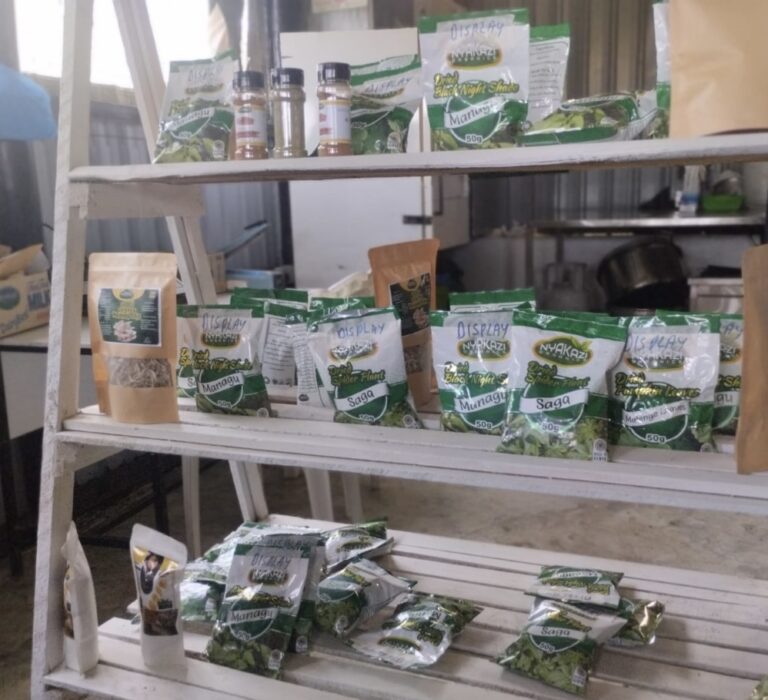
A youth group in Baringo and Nakuru counties has made over half a million sales of dried indigenous vegetables,such as black nightshade and spiderplant, by drying it in the sun to give it a shelflife of 15 months and selling it on social media.
The Nyakazi Organics group, which spans Elementaita, Gilgil, Nakuru County and is now sourcing from 150 farmers, is one of a series of youth groups incubated by the Seed Savers Network incubation programme.
“Nyakazi tries to solve post-harvest loss because organic farmers experience that a lot. Many youths are unemployed, and Nyakazi is trying its best to employ them here. The idea is to ensure the utilization of the foods through value addition,” said Kevin Njenga, a Nyakazi member who was among the first beneficiaries of the programme.
The group is now selling dried (managu) black mightshade, (saga) spider plant, (terere) amaranth, spinach and oyster mushrooms, which are all rich in iron, antioxidants, proteins, vitamins, fibre and calcium, which are perfect for improving bone health and overall vitality, with Seed Savers having provided the group with infrastructure, space and support for its idea.
It has established a rapid market among urban consumers focussed on health, as well as from the diaspora, prompting the group to now seek certification by the Kenya Plant Health Inspectorate Service (KEPHIS) so that it can also export the vegetables.
“Nyakazi has a big potential because many people who travel abroad want to carry back a taste of their home, so we will be exporting and employing more young people, soon after the certification by KEPHIS.”
“Our target market also entails those people living in the urban setup who are health-conscious and do not have time to go to the markets and get fresh vegetables. We have over half a million sales in the last two years since inception, which is a milestone for us,” he said.
“Our customers are mostly got from social media and referral by farmers who sell their vegetables to us. Social media is really a great place to market our products, we have done it pretty well,” he said.
Once brought to the Nyakazi Centre, the vegetables are sorted, then blanched, cooled and later dehydrated by drying in the sun (in a solar drier) where they rely on only the sun to dry them.
During the blanching, they are kept below set temperatures to stop the vegetables losing nutrition, for example through reducing their protein levels.
They are then packaged for sale, with their shelf life having been increased to 15 months, and supplied to direct buyers and through Seed Saver Network’s connections.
Nyakazi currently employs five to 10 youths, while farmers in Nakuru said it has made their farming easier, as they don’t make losses on vegetables going bad due to a lack of sales.
Beatrice Ndungu, a network farmer, said it had also cut out middlemen, meaning farmers were getting a higher proportion of the value from the crop.
Related News:
Mchunga weed stops Kenya’s biggest killer cancer
Nyamira women make Sh77K a week from spider plants
Kenya’s agriculture sector grows by 6.6 per cent
“There are no middlemen here, because once our vegetables are ready, we just call Nyakazi to inform them, together with my group of other farmers, then the produce is picked up. The profit is good because the middlemen in the Kenyan commercial markets buy the vegetables at lower prices and sell them making huge profits. Nyakazi has solved all that,” she said.
They also sell the vegetables through their website where a buyer can directly make a purchase and it is delivered to them.
Apart from Nyakazi, Seed Savers Network has also supported Sunny Bites Organic in Baringo County which is a social enterprise dealing with fruits. The fruits are also dried before they are supplied to the market. Both are part of the network’s expanding incubation programme, which is now expanding to more counties and welcoming youths with value addition ideas.
Are you a farmer looking to grow the most profitable crop on your farm, with or without irrigation. Use FarmBizAfrica’s HarvestMAX on https://harvestmax.farmbizapps.com and it will tell you in less than a minute what the highest income-earning crops are for your weather, soil type and this season, based on your seasonal weather forecast. Don’t make weather losses ever again, and more than triple your income.
Get your farming news by email.
Free. Market prices, crop news and farmer opportunities, straight to your inbox.