
Strawberry farmer finds organic success with pest-resistant Harmony variety, and jams
By MaryAnne Musilo
Onesmus Muthuri moved into organic farming six years ago, delivering profit failure for years, until he shifted to pest-resistant strawberry varieties that gave him 3x to 4x more fruit, and he began processing any damaged fruit into jams.
“It all started in September 2019, when we were experimenting with organic farming. By December, we decided on strawberries,” said Onesmut, the founder of Tawa Garden in Uthiru, Nairobi. “Vegetables were high effort, low payoff. Strawberries were rare and demanded and worth the risk.”
Early attempts proved difficult. “No one really understands strawberries’ nutritional needs here. We had to reach out to South African growers and just wing it,” he said. He began with the Chandler variety from California. “This variety is disease-prone and struggled with frost in 2022, then drought followed. Many farmers lost their crop.”
Even quality control was hard. “In terms of grams, the Chandler variety weighed less. Meeting the target was hard. This tight window, combined with pests, weather, and plant nutrition, narrows profit margins severely,” he said.
Muthuri later turned to new cultivars. “After realizing that the Chandler was not working for me, I tried the San Andrea and a new variety called Harmony,” he said. “This worked wonders. Chandler used to give 20 grammes per week per plant. But the new varieties are giving me 60 to 80 grammes, using the same input.”
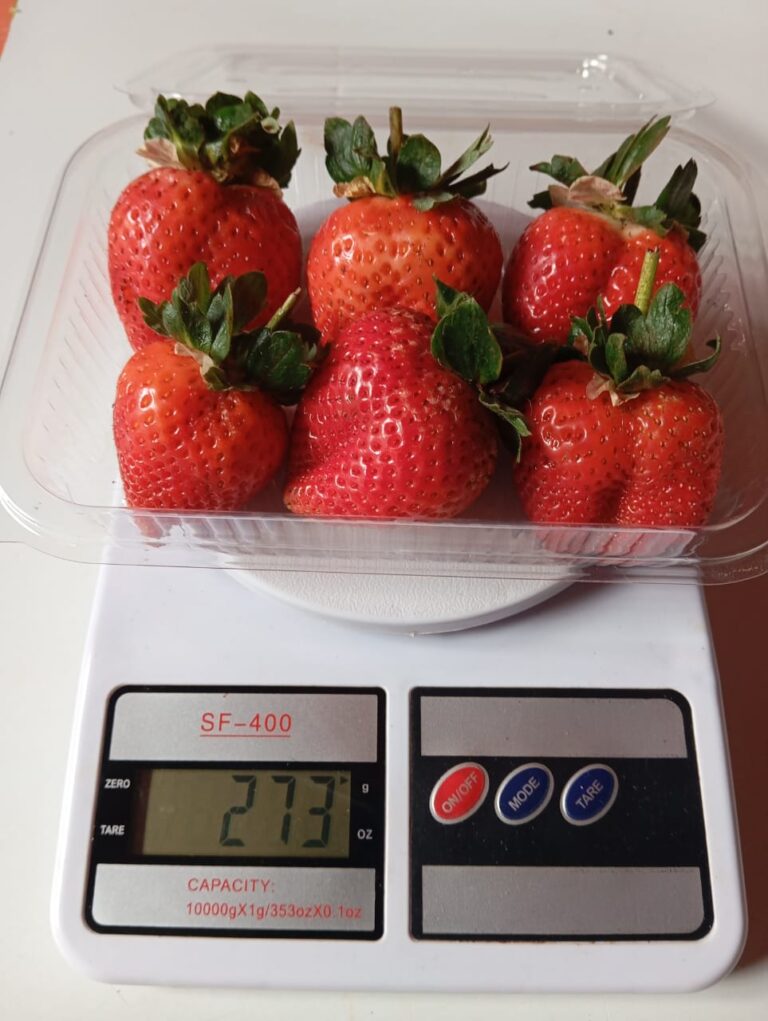
He said the two varieties are also easier to manage. “The two varieties are easier to manage in terms of diseases and pests. This cuts down on my labour and increases my profits.” Individual fruits are also bigger. “One fruit can weigh up to 50 grammes. This really creates a buzz but my farming is purely organic.”
“For starters we use red soil with animal manure. Then on the aphids and white flies, which mostly come in the rainy season, we treat the leaves using Muarubaini (neem tree), so that when the pests come, they chew and find that the taste is unpalatable. This kills the whole cycle. We are key on preventing disease and pest rather than dealing with them at hand,” he said.
Clients buy his strawberries for juices, yoghurts, or to eat fresh. “The varieties I plant have got a difference, one is sweet and has a longer shelf life, the other one is very friendly to the diabetic patients,” he said.
Still, about 15 to 20 per cent of his fruit is unmarketable. “This is the grade 3, those with packaging scars, insect scratches, or slight spoilage. We turn them into jam. We call them ‘wastage.’ Instead of discarding them, we crush and pulp them into jam, selling at Sh600 per kilo,” said Muthuri.
He sticks to organic processing too. “We use our own fertilizer, manure, plant extracts, and tested organic solutions,” he said. “Pest control? Biological. We introduce nematocide to fight root pests and essential oils that disrupt aphids. It takes three weeks, but there’s no harmful residue.”
Tawa Garden also sells vertical gardening installations and strawberry seedlings at Sh200 each, three to four times the local market rate. “We’re sold out, but taking orders for delivery in three months,” he said.
For Muthuri, jam represents more than profit. “Jam isn’t just a product, it’s a solution. It’s converting our waste into income, sustainable farming into consumer delight. We’re not just farming, we’re redefining value in every berry.”
Are you a farmer looking to grow the most profitable crop on your farm, with or without irrigation. Use FarmBizAfrica’s HarvestMAX on https://harvestmax.farmbizapps.com and it will tell you in less than a minute what the highest income-earning crops are for your weather, soil type and this season, based on your seasonal weather forecast. Don’t make weather losses ever again, and more than triple your income.
Get your farming news by email.
Free. Market prices, crop news and farmer opportunities, straight to your inbox.