
Thrips and FCM driving EU border rejections of Kenyan horticulture
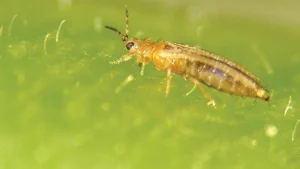
In July, thrips on sweet basil and false codling moth (FCM) on capsicum drove almost all the European Union’s border rejections of Kenyan produce, raising fresh alarms over the country’s horticultural export future.
Of nine consignments turned back due to quarantine pests, seven were rejected for thrips on sweet basil, while the other two included one rejection for FCM on capsicum.
Over the past year, thrips have been the largest cause of the EU’s rejections of Kenyan fresh produce, accounting for half of the 74 export rejections due to pests.
Of these 37 rejections, 32 were of sweet basil, which is produced predominantly by smallholders.
Kenyan growers have struggled to contain thrips which reproduce rapidly and often remain hidden inside dense leaf clusters, making pesticide applications ineffective. Control has been further constrained by strict EU residue limits, leaving farmers reliant on biological and cultural control methods, on which there is little information and which remain costly, unevenly adopted, and often ineffective.
At the same time, false codling moth interceptions have been shifting from roses, which are Kenya’s leading flower export produced predominantly by large farms, to infestations of capsicum.
Rejected rose consignments due to FCM fell from 11 in the six months from August 2024 to January 2025 to 6 in the six months from February to July 2025.
But at the same time, rejections due to FCM on capsicum have been slowly rising, to 5 in the last year, with the crop grown mainly by smallholders who cannot afford the intensive monitoring and pest-control systems used by the large-scale farms.
This raises the spectre of increased FCM momentum as the pest increases its footprint across the country’s smaller farms..
The Kenyan government has no national pest control strategy and no public information programme on pest control for the country’s farmers, which has been felt particularly acutely at a time when it has been withdrawing mainstream pesticides.
This is increasing the threat to Kenya’s future as a horticultural exporter to Europe.
Kenya’s FCM infestations have triggered increasing EU inspections, with Kenyan roses rising from 5 per cent in 2020 to 25 per cent by May 2024, and that inspection rate now extended to multiple other crops too under Regulation (EU) 2024/2004, which came into force on 26 April 2025.
Exporters report that the higher inspection levels are inflating costs across the supply chain. Delays, rejected shipments, and quarantine treatments are cutting returns by up to 30 per cent for some consignments.
Direct inspection expenses, including testing, refrigeration, and documentation, can run into several hundred dollars per shipment, further eroding margins.
Are you a farmer looking to grow the most profitable crop on your farm, with or without irrigation. Use FarmBizAfrica’s HarvestMAX on https://harvestmax.farmbizapps.com and it will tell you in less than a minute what the highest income-earning crops are for your weather, soil type and this season, based on your seasonal weather forecast. Don’t make weather losses ever again, and more than triple your income.
Get your farming news by email.
Free. Market prices, crop news and farmer opportunities, straight to your inbox.