
Roasting soil helps deal with bacterial wilt
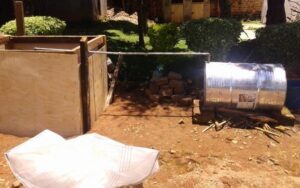
Soil heating system.
Bacterial wilt is one of the soil-borne diseases that attack tomatoes, potatoes, pepper, capsicum, among other solanaceae family crops.
Bacterial wilt causes massive loses and there is no effective remedy against this infection. Farmers and agribusiness companies are roasting soil to kill the Ralstonia solanacearum bacteria before growing their tomatoes.
Wycliffe Obwoge, an agronomist, says massive roasting soil is not an easy task that is why farmers are picking a few kilos of soil which they steam for hours.
“Controlling bacterial wilt is not easy. But exposing the soil to high temperatures would kill the bacteria. But a farmer must take soul to experts to test and confirm indeed that it bacterial wilt has infested the farm,” he says.
RELATED ARTICLE: Amiran launches tomato variety resistant to bacterial wilt
RELATED ARTICLE: JKUAT students find solution to tomato bacteria wilt
RELATED ARTICLE: New tomato variety battles wilt disease
This method is most appropriate given that farmers are moving to planting bags, which will prevent the soil from contamination.
The soil will remain sterile and growing for two seasons would need another sterilization.
Using a wooden movable box of about 2m by 2m by 2m, a farmer can lay perforated metallic pipes at the base. They will boil water from a drum and direct the steam into the pipes at the base of the wooden box.
The steam will rise from the pipes heating the soil for about four hours. Exposing the soil to more than 70 degrees Celsius would kill the bacteria and other useful micro-organisms.
If the farmer intended to use organic manure, it should be included in the soil, to avoid re-contamination.
Get your farming news by email.
Free. Market prices, crop news and farmer opportunities, straight to your inbox.